Walk up to the gate of any busy Indian manufacturing plant, pharmaceutical cleanroom, hospital ICU, or food-processing unit during a 7:00 AM shift change, and you will see the same bottleneck: workers pulling off N95 masks, unhooking safety helmets, or peeling off industrial gloves just to punch in.
In 2027, traditional optical fingerprint scanners are already losing ground in high-hygiene and heavy-industrial workplaces. Grease, sanitizer residue, worn ridges, and cross-contamination concerns have pushed HR and security teams to adopt touchless hardware. That leaves one central buying question when evaluating a palm vein vs face recognition attendance system in India: which contactless biometric actually holds up when Personal Protective Equipment (PPE) is non-negotiable?
The honest answer is not "one beats the other everywhere." Each technology has a clear blind spot depending on which piece of safety gear your staff wears. Below is a practical, floor-tested breakdown to help you choose the right architecture for your workforce.
How Each Contactless Technology Works Under the Hood
Before testing them against safety gear, it helps to understand what each sensor actually reads.
Contactless Palm Vein Recognition
Palm vein terminals emit harmless near-infrared (NIR) light onto the user's open palm held 5 to 15 cm above the sensor. Deoxygenated hemoglobin flowing through the subcutaneous veins absorbs the NIR light, creating a dark, high-contrast vascular map unique to each employee. Because the pattern lives beneath the skin, surface cuts, oil stains, flour dust, or dry skin barely affect recognition—and replicating a living vascular network with a photo or silicone mold is virtually impossible.
AI Face Recognition (Visible-Light + Dual-Lens IR)
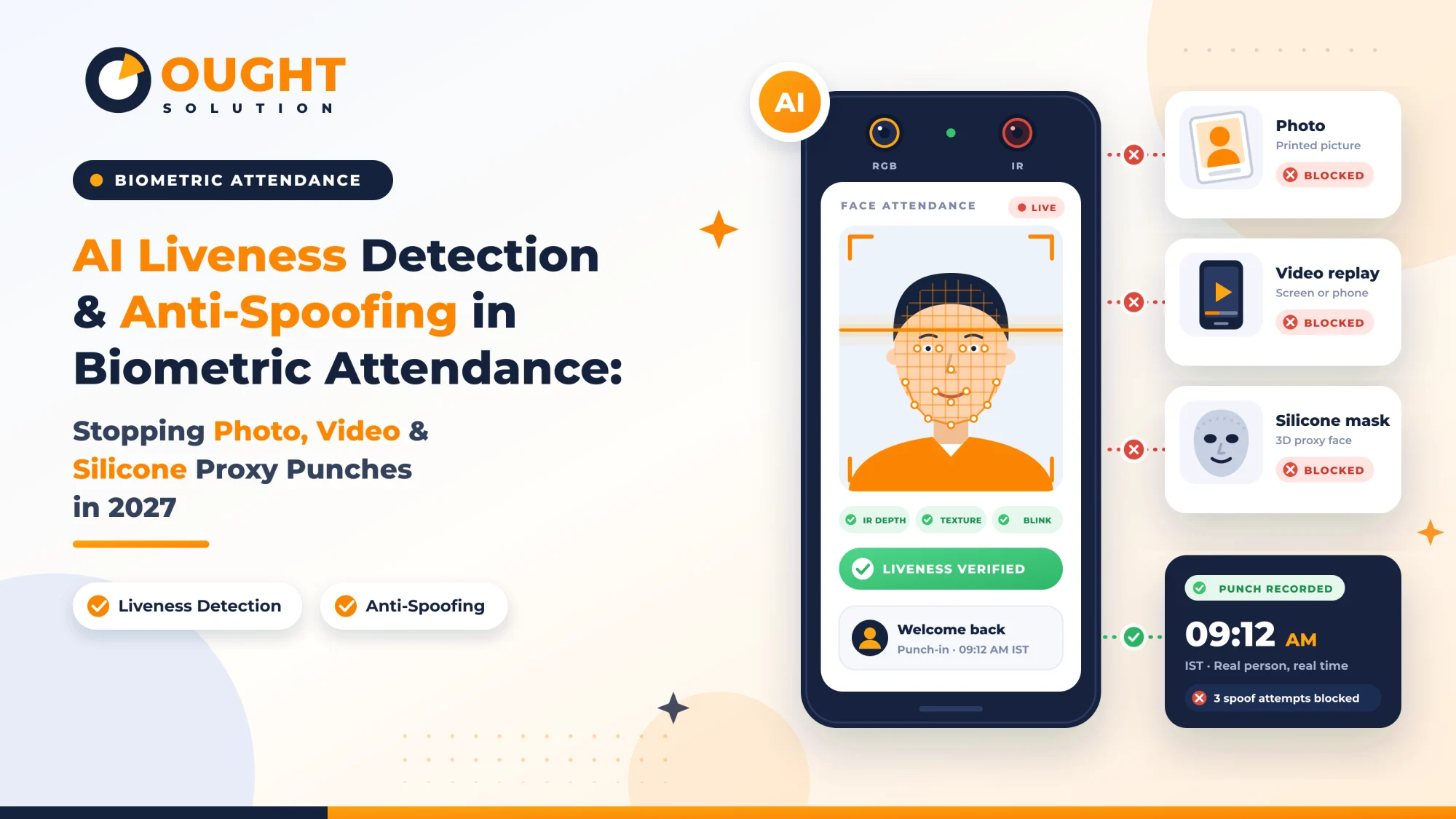
Modern 2027 facial recognition terminals do not rely on a basic webcam. Enterprise-grade devices combine dual-lens RGB and infrared (IR) cameras with deep-learning neural networks and 3D liveness detection. They map dozens of geometric landmarks across the forehead, eye sockets, nose bridge, and periocular region in under half a second, while blocking spoofing attempts made with smartphone videos or printed photos.
Head-to-Head PPE Stress Test: Masks, Helmets, and Gloves
This is where marketing brochures end and workplace reality begins. Here is how both systems behave when employees keep their gear on.
1. Surgical Masks, N95s, and Industrial Respirators
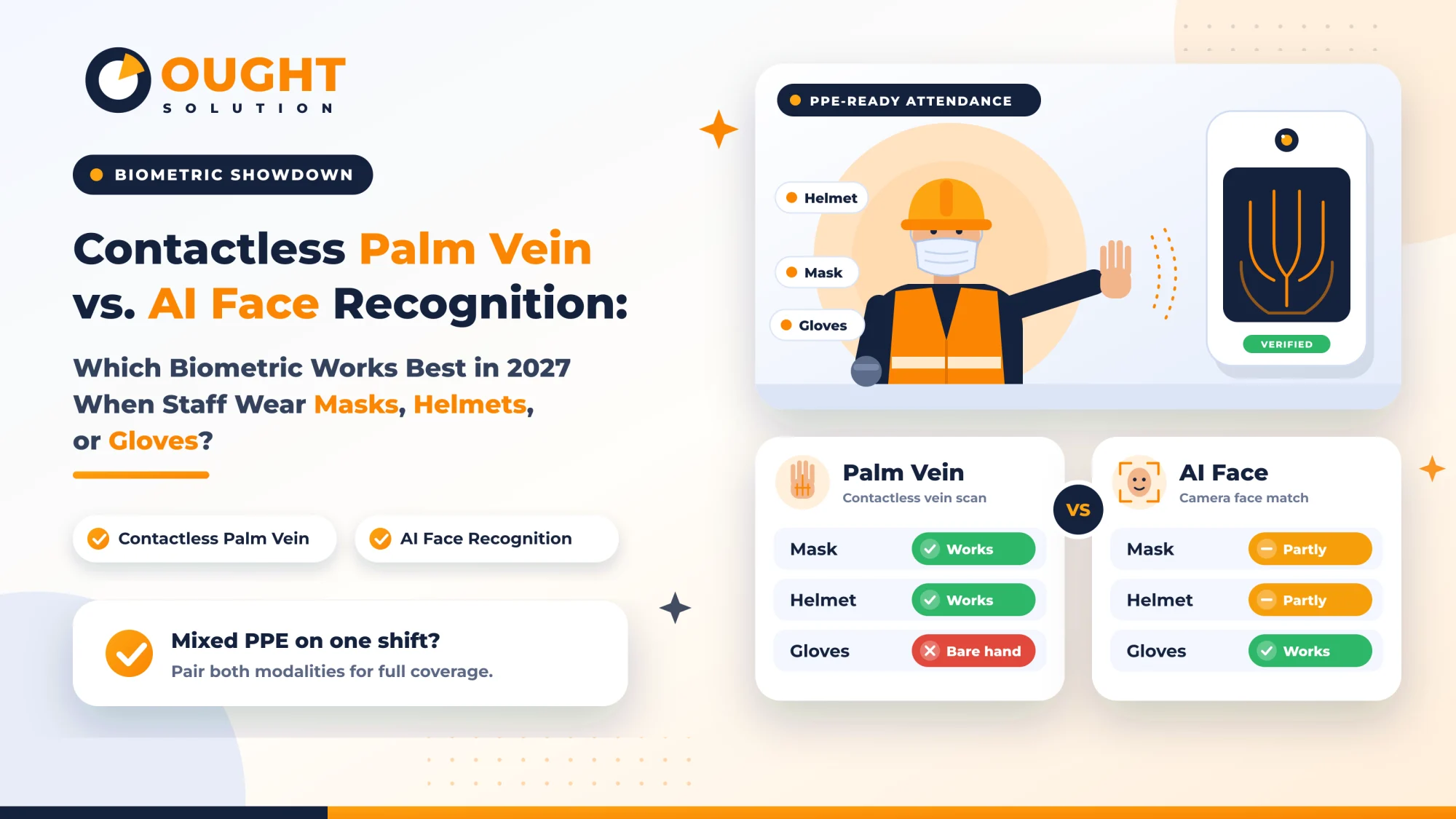
AI Face Recognition: Modern deep-learning algorithms focus heavily on the periocular zone (eyes, eyebrows, and upper nose bridge). Even with a surgical or N95 mask covering the lower half of the face, dual-lens IR+RGB terminals can still verify identity accurately in 2027. However, accuracy drops if an employee pairs a bulky industrial respirator with dark safety goggles at the same time.
Palm Vein Recognition: Clear winner. Because the face is completely irrelevant to the scan, workers in full-face respirators, surgical masks, or religious face coverings can clock in effortlessly without ever touching or lowering their mask.
2. Safety Helmets, Hard Hats, and Hairnets
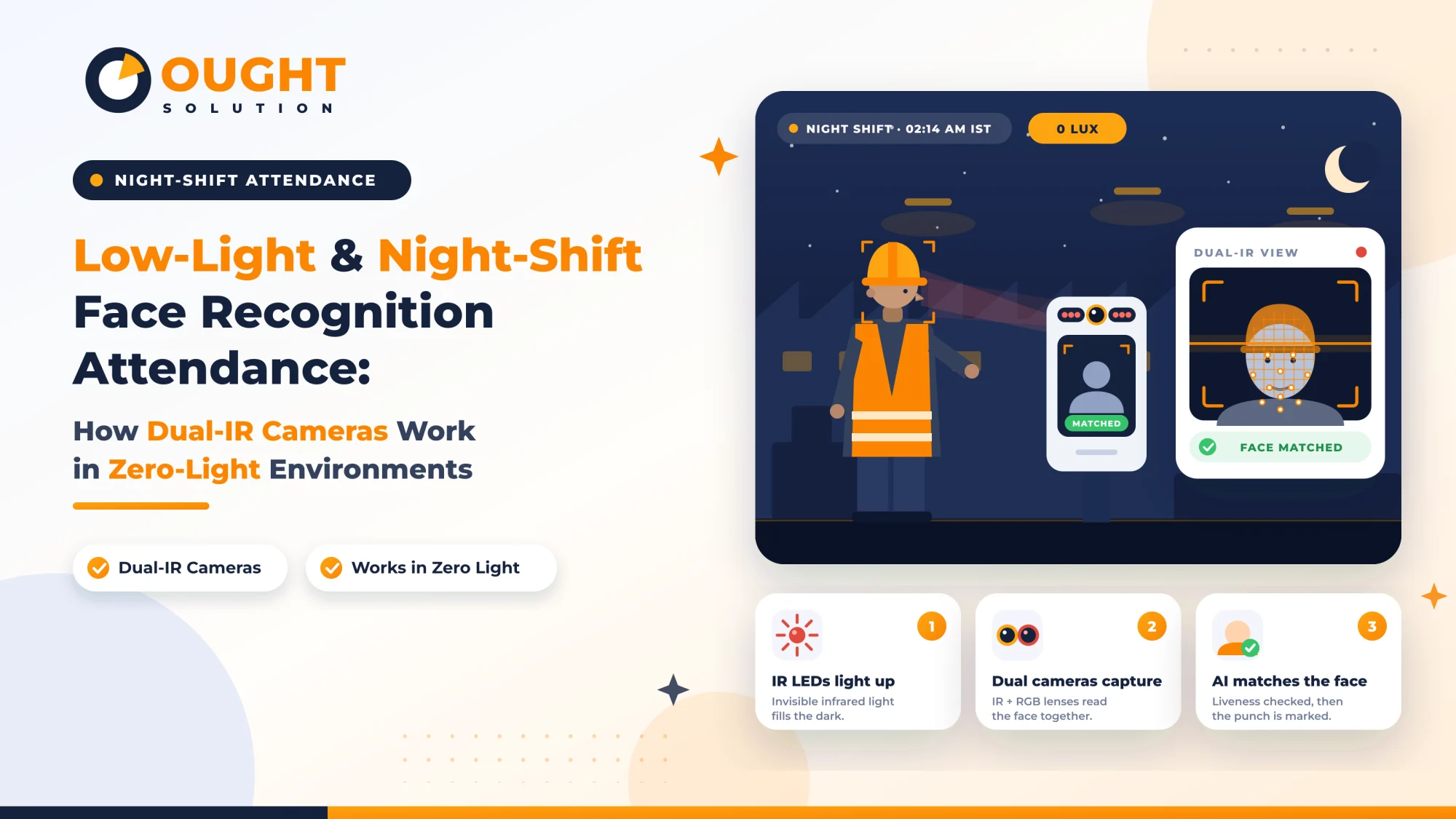
AI Face Recognition: Standard safety helmets and cleanroom hairnets rarely block the eye-and-brow region, so well-angled AI cameras handle them smoothly—even in dim entryways when paired with day/night array LEDs. The main edge case is a wide-brimmed hard hat casting harsh overhead shadows in outdoor sunlight, or a welding visor pulled down over the face.
Palm Vein Recognition: Clear winner. Hard hats, bump caps, welding hoods, and surgical bouffant caps have zero impact on palm vein scanning. Employees keep head protection secured from gate to workstation.
3. Industrial, Nitrile, and Cut-Resistant Gloves
Palm Vein Recognition: Major limitation. Near-infrared light cannot penetrate thick leather, rubber, thermal, or cut-resistant industrial gloves. Even opaque nitrile or latex gloves scatter NIR light enough to trigger false rejections. If your staff cannot remove gloves at the checkpoint (for example, in chemical handling, cold storage, or sterile lab zones), palm-only terminals will create queues.
AI Face Recognition: Clear winner. Hands-free authentication means workers carrying toolboxes, wearing heavy welding gauntlets, or keeping sterile gloves intact simply glance at the terminal while walking past.
Side-by-Side Comparison: Palm Vein vs. AI Face Recognition (India 2027)
| Evaluation Factor | Contactless Palm Vein | AI Face Recognition (Dual-Lens IR/RGB) |
| Works with Face Masks / Respirators | Excellent (100% unaffected) | Very Good (periocular AI handles standard masks; struggles with mask + dark goggles) |
| Works with Safety Helmets / Visors | Excellent (100% unaffected) | Good (works with standard helmets; blocked by lowered tinted visors) |
| Works with Gloves | Poor (must remove gloves to scan) | Excellent (completely hands-free) |
| Hygiene & Cross-Contamination | 100% touchless (5–15 cm hover) | 100% touchless (0.5–1.5 m walk-up) |
| Anti-Spoofing & Liveness Security | Extremely high (internal blood-flow pattern) | Very high (dual-lens IR + RGB blocks photo/video proxy punches) |
| Indian Lighting Conditions | Unaffected by bright outdoor sun or dark corridors | Requires WDR + IR day/night LEDs for outdoor gates or dim plants |
| Dust, Grease & Wet Hands | High tolerance (reads beneath the skin) | Unaffected (does not scan hands) |
| Throughput During Shift Change | Fast (~0.5–1 second per person) | Fastest (~0.3–0.5 seconds, walk-through friendly) |
| Hardware Cost in India | Higher (specialized NIR vascular optics) | Moderate to Competitive (widely available across budgets) |
Which Biometric Fits Your Industry Best?
Choosing the right palm vein vs face recognition attendance system in India comes down to matching the sensor to your strictest PPE rule:
Hospitals, ICUs, & Diagnostic Path Labs: Staff frequently wear both masks and surgical gloves, though gloves are typically donned after entering sterile corridors. AI Face Recognition excels at ward entry doors where hands are full or gloved, while Palm Vein is ideal at main staff entryways where doctors and nurses keep masks on continuously.
Pharmaceutical & Cleanroom Manufacturing: Full gowning (hoods, goggles, masks) leaves very little facial area exposed. If staff punch in before gloving up, Palm Vein delivers unmatched accuracy and zero-contact hygiene. If punching in after gloving, AI Face Recognition (without tinted goggles) or RFID + Face is more practical.
Heavy Manufacturing, Warehouses & Construction Sites: Workers wear hard hats, reflective gear, and thick work gloves—often in dusty, semi-outdoor gates. Dual-lens AI Face Recognition with wide dynamic range (WDR) and helmet tolerance wins for hands-free speed at entry turnstiles.
Food Processing & Commercial Kitchens: Hairnets, masks, wet hands, and flour or oil residue make fingerprint machines fail within weeks. Palm Vein handles wet/coated palms effortlessly, while AI Face works best if food-grade gloves stay on all shift.
Corporate Offices & IT Parks: AI Face Recognition offers the fastest frictionless lobby experience and integrates cleanly with electromagnetic glass door locks and turnstiles.
Why Smart Indian Enterprises Are Choosing Multi-Modal Terminals in 2027
In practice, very few workplaces have identical PPE rules across every department. Your warehouse loaders wear gloves and helmets, your quality-assurance lab wears masks and hairnets, and your admin team walks in wearing everyday clothes.
Buying two separate ecosystems creates an IT headache. That is why the fastest-growing trend in 2027 is deploying multi-modal contactless terminals—single devices that combine AI Face Recognition + Touchless Palm Recognition + RFID/Fingerprint in one rugged housing.
With a multi-modal approach, HR can assign authentication rules by department:
Shop-floor & gloved teams: Authenticate via AI Face Recognition.
Masked lab & cleanroom teams: Authenticate via Touchless Palm Recognition.
Visitors & contract staff: Authenticate via Mifare/Proximity RFID cards or temporary face enrollment.
For example, Ought Solution's Biometric Attendance & Access Control Hardware lineup includes hybrid options tailored for Indian site conditions—such as the Biometric OU-F22 (combining visible-light AI face recognition with live body sensing, touchless palm recognition, fingerprint, and Mifare card support) and the Biometric OU-BM60W Pro / OU-BM70W Pro series with day/night array LEDs and direct door-access relay control.
Hardware Is Only Half the Battle: Cloud Sync & Payroll Integration
Even the most accurate palm vein or AI face sensor loses value if HR still spends three days exporting USB pen drives at month-end. When upgrading your biometric infrastructure in 2027, verify that your hardware connects to a unified cloud backend:
Sub-2-Second ADMS Cloud Push: Real-time synchronization over Wi-Fi, LAN, or 4G without needing costly static IPs across branches.
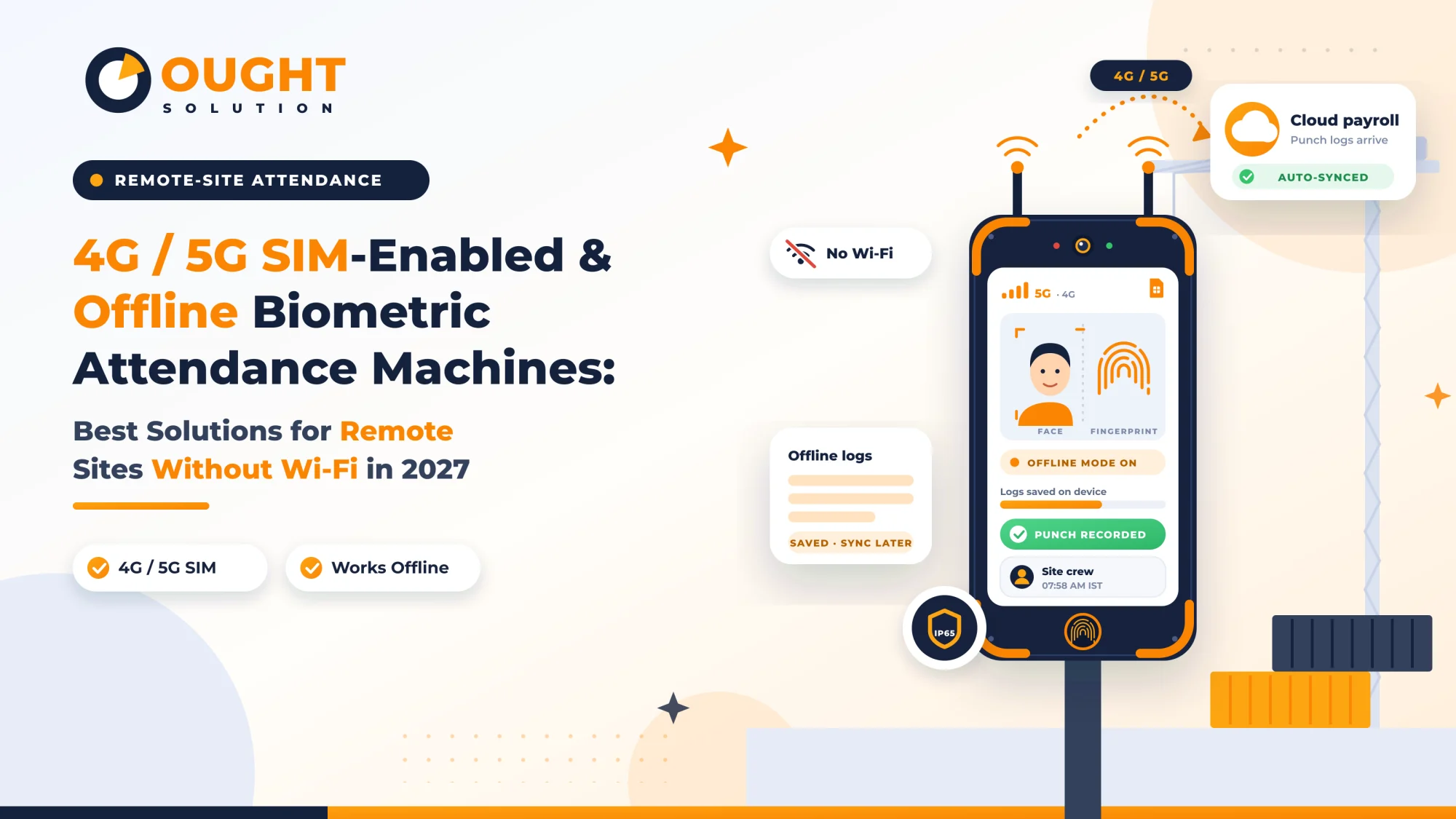
Offline Buffer Protection: Look for terminals that cache 100,000+ punch logs locally during power or internet outages and auto-sync once connectivity returns.
Complex Shift & Overtime Automation: Automated handling for rotational shifts, cross-midnight factory rosters, late-mark rules, and statutory muster rolls (such as Form-B attendance registers).
Access & Canteen Interlocking: Linking your biometric punches directly to electromagnetic door locks, turnstiles, and cashless canteen meal quotas so only clocked-in employees receive access.
Pairing contactless terminals with Ought Solution's Smart Attendance Systems eliminates manual payroll reconciliation completely—pushing verified IN/OUT timestamps straight into your payroll engine or existing ERP via API/webhooks.
Ready to Upgrade to PPE-Friendly Contactless Attendance?
Do not guess which sensor will survive your shop floor, cleanroom, or hospital corridor. Whether you need high-speed AI facial recognition, touchless palm terminals, or a multi-modal hybrid setup synced directly to your payroll and ERP, Ought Solution supplies, configures, and supports end-to-end hardware and cloud software across India.
Explore our Biometric Time & Attendance Systems or reach out to our team at sales@oughtsolution.com to book a live demo and get a tailored hardware recommendation for your workforce.

Ought Solution Admin is the technical editorial and solutions architecture desk at Ought Solution, a global B2B IT consulting, custom ERP software, and biometric hardware integration firm. Drawing from hands-on deployments across Manufacturing Units / Plants, healthcare diagnostics, educational campuses, and corporate…