Why Standard Wi-Fi & LAN Biometric Devices Fail at Remote Sites
Traditional biometric attendance terminals rely on local Ethernet (LAN) cabling or stable office Wi-Fi routers to transmit punch data to HR servers. While that setup works smoothly inside corporate offices, it breaks down rapidly across distributed Indian operations—such as highway and metro construction corridors, mining zones, greenfield manufacturing units, solar farms, and peripheral logistics warehouses.
At these locations, laying fiber or CAT6 cables is either cost-prohibitive or physically impossible due to shifting site perimeters. Even when basic broadband is installed, frequent power cuts, dust, monsoons, and cellular dead zones interrupt connectivity. Without a purpose-built 4G / 5G SIM biometric attendance machine with offline sync in India, HR teams are forced back into manual muster rolls—inviting proxy attendance ("buddy punching"), delayed wage disbursement, and compliance disputes.
How 4G / 5G SIM + Offline Buffer Architecture Solves the Connectivity Gap
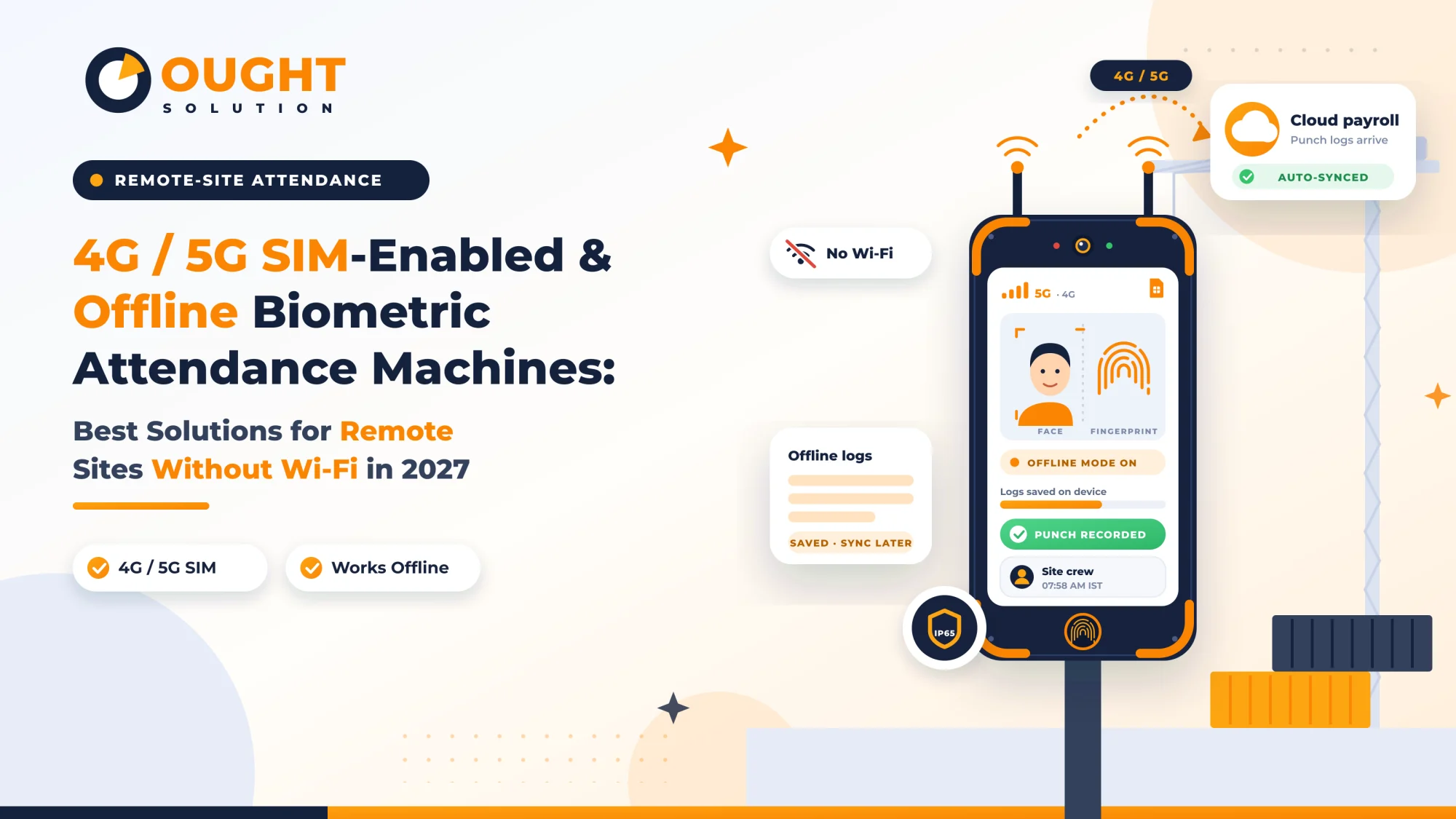
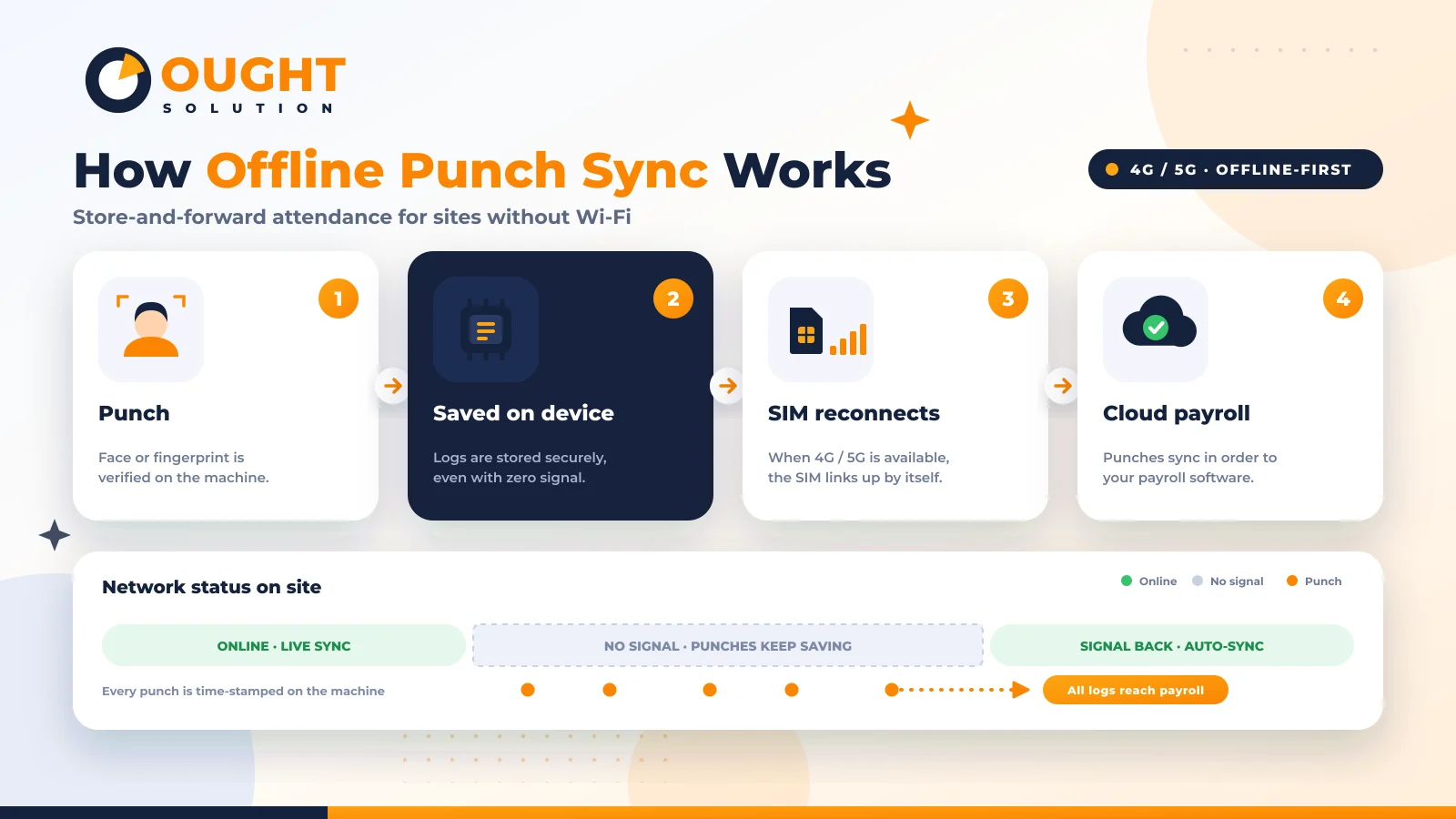
Modern cellular biometric terminals eliminate dependency on local routers by integrating an internal 4G/5G SIM slot alongside high-speed non-volatile flash memory. Instead of treating network drops as system failures, these devices follow a store-and-forward operational model:
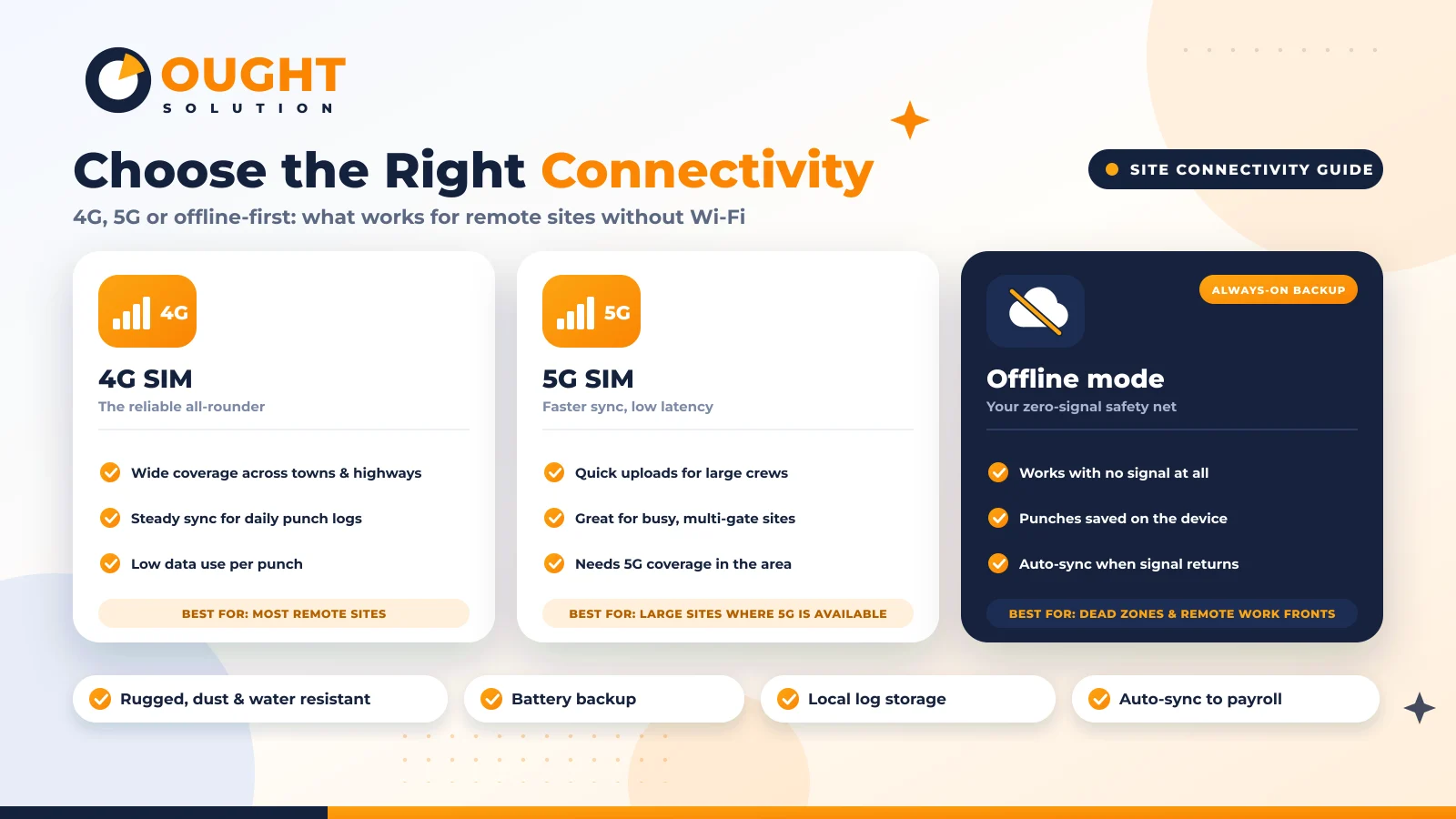
Direct Cellular Uplink: An active 4G or 5G M2M (Machine-to-Machine) data SIM connects the terminal directly to your cloud attendance server using encrypted HTTPS/push protocols—no router, static IP, or port forwarding required.
High-Capacity Offline Buffer Storage: When a remote site experiences temporary cellular tower congestion or zero signal, the terminal continues verifying faces, fingerprints, or RFID cards at full speed. Every timestamped punch (often 1,00,000 to 5,00,000+ logs) is safely written to onboard flash memory.
Zero-Intervention Auto-Sync: The moment cellular reception returns, the device automatically pushes the queued offline punch logs to the central database in chronological order without duplicate entries or manual USB downloads.
Built-In Battery Backup: Paired with internal lithium-ion battery packs (delivering 4 to 8 hours of standalone operation), shifts continue clocking in and out seamlessly even during grid outages.
Key Features to Look for in a Remote-Site Biometric Machine (2027 Checklist)
Before deploying hardware across unconditioned or semi-outdoor gates, evaluate devices against five critical engineering criteria:
| Feature | Why It Matters at Remote Indian Sites | Recommended Standard |
| Cellular Modem | Ensures wide carrier compatibility (Jio, Airtel, Vi) across rural and highway corridors | Dual-band 4G LTE / 5G fallback with external high-gain antenna support |
| Offline Log Capacity | Prevents data overwrite during multi-day network outages | Minimum 1,00,000 transaction logs + 5,000+ user templates |
| Verification Mode | Workers in construction or manufacturing often have worn or dusty fingerprints | Dual-camera IR/Visible-Light Facial Recognition + Fingerprint/RFID |
| Power Resilience | Remote security gates rarely have uninterrupted UPS lines | Built-in Li-ion battery backup + 12V DC solar/inverter compatibility |
| Ingress Protection | Dust, humidity, and temperature swings degrade standard indoor plastics | IP65-rated weather-resistant enclosure (or protective outdoor hood) |
Top Biometric Attendance Models for Wi-Fi-Free Sites from Ought Solution
At Ought Solution, we configure and deploy industrial-grade biometric terminals engineered specifically for Indian field conditions—pre-integrated with our Smart Office Software for automated shift, overtime, and contractor payroll calculation
Real-World Use Cases Across India
Infrastructure & Highway Construction: Project managers mount 4G-enabled facial terminals inside portable site cabins or mobile security vans. Even as work crews move every few kilometers, attendance syncs centrally to head-office payroll every hour.
Third-Party Logistics (3PL) & Cold Storage Warehouses: Metal roofing and racking often block indoor Wi-Fi signals. Cellular terminals positioned at loading bays log loader shifts offline and sync whenever signal windows open.
Multi-Site Manufacturing & Plant Gates: Enterprises operating satellite units across industrial estates unify attendance across every plant onto a single Smart Office dashboard without leasing expensive point-to-point MPLS lines.
Contract Labor & Facility Management: Agencies deploying security guards, housekeeping staff, and technicians across client premises track verified on-site presence without asking clients for corporate Wi-Fi passwords.
Seamless Integration with Smart Office Software
Hardware is only half the equation. When paired with Ought Solution's Smart Office Software, punch data from dozens of 4G/5G remote terminals flows into one unified cloud or on-premise dashboard:
Real-Time Device Health Monitoring: Instantly see which remote terminals are online, operating on battery, or holding queued offline logs.
Automated Shift & Overtime Rules: Configure rotational shifts, grace periods, late-coming deductions, and contractor wage sheets without manual Excel cleanup.
API & ERP/Payroll Exports: Push clean attendance registers directly into Tally, SAP, Zoho People, or custom payroll modules.
Deploy Reliable Remote Attendance Anywhere in India
Do not let patchy broadband or off-grid project locations create blind spots in your workforce operations. Whether you need a single portable 4G terminal for a new site or a multi-state rollout across dozens of gates, Ought Solution supplies, configures, and supports end-to-end 4G / 5G SIM biometric attendance machines with offline sync tailored to your site conditions.
Ready to upgrade your remote site attendance? Explore our complete biometric hardware lineup at Ought Solution or connect with our technical team for a live demo and site-specific recommendation.

Ought Solution Admin is the technical editorial and solutions architecture desk at Ought Solution, a global B2B IT consulting, custom ERP software, and biometric hardware integration firm. Drawing from hands-on deployments across Manufacturing Units / Plants, healthcare diagnostics, educational campuses, and corporate…