Budgeting for a website in 2027 is no longer just about paying for a digital brochure. Between Google’s strict Core Web Vitals thresholds, AI-driven search overviews, and rising customer expectations for sub-second load times, your website is either a 24/7 revenue engine or an expensive liability.
Whether you are a startup founder in London, a procurement lead in Dubai, or a growing enterprise in New York or Mumbai, website creation and development cost varies dramatically based on two factors: technical complexity and where your engineering team is located.
Below is a transparent, data-backed global pricing breakdown for 2027—covering everything from 5-page small business websites to multi-tenant enterprise platforms, regional hourly rates, and the recurring operational expenses many agencies leave off their initial quotes.
1. 2027 Website Development Cost by Business Tier
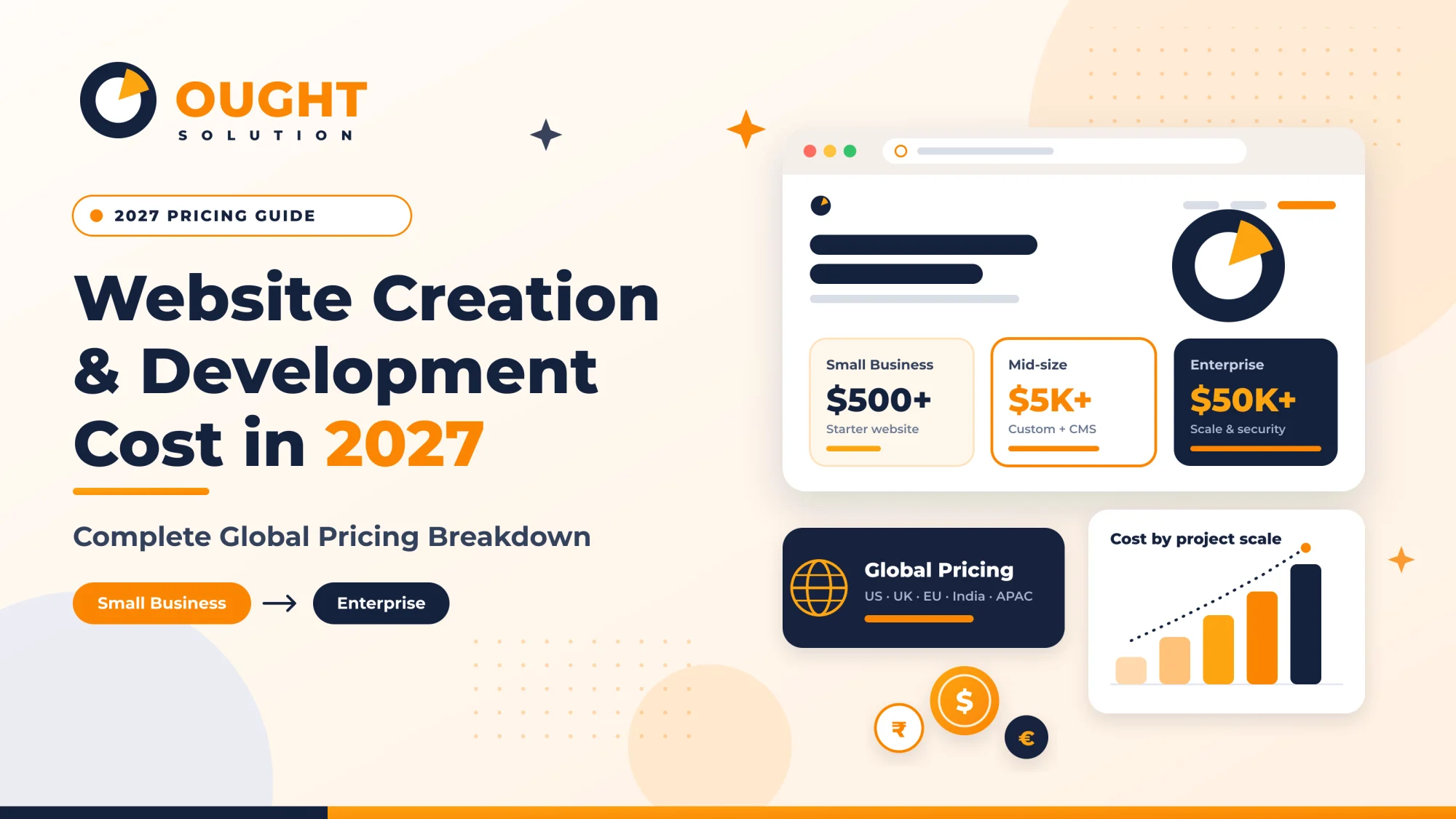
The gap between a template-based brochure site and a custom-engineered web platform comes down to architecture, integrations, and security. Here is what businesses globally are investing in 2027:
| Website Tier | Typical Scope & Architecture | Global Agency Cost (USD) | India / South Asia Cost (INR) | Estimated Timeline |
| Basic Small Business Site | 5–10 pages, mobile-first UI, contact forms, basic CMS, foundational SEO | $2,000 – $8,000 | ₹15,000 – ₹75,000 | 2 – 4 weeks |
| Growth / Custom Corporate Site | 10–25+ custom pages, bespoke UI/UX, custom CMS, JSON-LD schema, CRM/WhatsApp lead routing | $8,000 – $25,000 | ₹75,000 – ₹4,50,000 | 4 – 10 weeks |
| E-Commerce Storefront | Product catalog, payment gateways (Stripe, Razorpay, PayPal), shipping APIs, inventory sync | $5,000 – $50,000+ | ₹60,000 – ₹10,00,000+ | 4 – 16 weeks |
| Custom Web App / SaaS Portal | Role-based access control (RBAC), user dashboards, REST APIs, database engineering | $15,000 – $80,000+ | ₹3,50,000 – ₹25,00,000+ | 2 – 5 months |
| Enterprise & Multi-Vendor Platform | High-concurrency cloud infrastructure, ERP/hardware webhooks, multi-region compliance, custom workflows | $50,000 – $250,000+ | ₹25,00,000 – ₹1 Crore+ | 4 – 12 months |
2. Global Agency Rates: Cost Comparison by Region in 2027
Because software engineering is borderless, smart organizations benchmark regional rates before locking in a vendor. Choosing an offshore or hybrid engineering partner can reduce total capital expenditure by 50% to 75% without sacrificing code quality—provided you work with an established engineering team rather than unvetted gig workers.
| Region / Market | Freelancer Hourly Rate (USD) | Mid-to-Senior Agency Rate (USD) | Key Advantages & Trade-Offs |
| United States & Canada | $50 – $120 / hr | $120 – $350 / hr | Local time-zone alignment and legal familiarity, but highest overhead costs. |
| United Kingdom | $50 – $100 / hr | $100 – $300 / hr | Strong creative and enterprise governance; high agency retainers. |
| Western Europe | $45 – $95 / hr | $80 – $160 / hr | High engineering standards and GDPR expertise; premium pricing. |
| Middle East (UAE / Saudi Arabia) | $25 – $60 / hr | $60 – $150+ / hr | Fast-growing digital market; many local firms outsource technical execution. |
| Eastern Europe | $35 – $75 / hr | $45 – $130 / hr | Solid technical talent and EU time-zone overlap; moderate cost savings. |
| India & South Asia | $15 – $40 / hr | $25 – $65 / hr | Deep full-stack talent pool, English fluency, and maximum ROI for custom builds. |
| Southeast Asia | $15 – $45 / hr | $25 – $85 / hr | Competitive rates for front-end and CMS work; smaller enterprise architecture pool. |
3. Where Your Budget Actually Goes: Phase-by-Phase Breakdown
Understanding how an agency allocates your budget helps you spot inflated quotes—or dangerously underpriced proposals that cut corners on security and SEO.
Discovery, Wireframing & UI/UX Design (15% – 20% of budget): Information architecture, user journey mapping, mobile-first prototypes, and brand-aligned visual design. Custom design eliminates the bloated code found in mass-market templates.
Front-End Engineering (20% – 25% of budget): Translating designs into clean, semantic HTML5, CSS, and lightweight JavaScript engineered to pass Google’s Core Web Vitals (Largest Contentful Paint under 2.5s and Cumulative Layout Shift under 0.1).
Back-End & Database Architecture (25% – 35% of budget): Server-side logic (such as high-speed PHP and normalized MySQL relational databases), custom admin panels, user authentication, and role-based permissions.
Third-Party API & Payment Integrations (10% – 15% of budget): Connecting payment gateways, CRM pipelines, ERP inventory systems, SMS/WhatsApp notifications, or even physical IoT/biometric hardware webhooks.
Technical SEO, QA Testing & Deployment (10% – 15% of budget): Cross-browser testing, SSL/firewall hardening, XML sitemap automation, canonical tags, and embedded JSON-LD structured data so search engines index every service page accurately from day one.
4. Hidden Post-Launch Costs to Plan For
A common mistake businesses make is spending 100% of their digital budget on launch day and ignoring recurring operational expenses. Factor these annual line items into your 3-year Total Cost of Ownership (TCO):
Domain & Enterprise SSL Certificates: $15 – $150/year depending on TLD extensions and multi-domain wildcard security.
Cloud Hosting & CDN: $100 – $600+/year for standard business sites; $100 – $500+/month for high-traffic web apps and e-commerce platforms requiring dedicated Linux servers or AWS/GCP scaling.
Ongoing Maintenance & Security Patching: Typically 15% to 20% of the initial development cost per year, covering database backups, uptime monitoring, dependency updates, and bug fixes.
Third-Party SaaS & Plugin Licenses: Proprietary themes, premium plugins, and API usage fees can quietly add $100 – $1,000+/month if your site relies heavily on third-party extensions instead of clean custom code.
5. How to Maximize ROI Without Overpaying
You do not need a $100,000 budget to compete globally, nor should you risk your brand reputation on a $200 template that fails security audits and never ranks on Google.
Avoid Plugin Bloat with Custom-Engineered Core Architecture: Heavy off-the-shelf themes slow down mobile load times and create security vulnerabilities. A lean, custom-coded website with a tailored admin dashboard gives your team total control over pages, blogs, and meta tags without recurring plugin fees.
Build Technical SEO into the Foundation: Retrofitting schema markup, clean URL structures, and mobile responsiveness after launch costs twice as much. Demand built-in technical SEO before a single line of code is deployed.
Partner with a Transparent Global Engineering Team: Working directly with an experienced engineering firm like Ought Solution gives organizations across the US, UK, Europe, the Middle East, and India access to senior full-stack architects, custom Website Development, and scalable Web Application Development at transparent, predictable milestones.

Ought Solution Admin is the technical editorial and solutions architecture desk at Ought Solution, a global B2B IT consulting, custom ERP software, and biometric hardware integration firm. Drawing from hands-on deployments across Manufacturing Units / Plants, healthcare diagnostics, educational campuses, and corporate…